
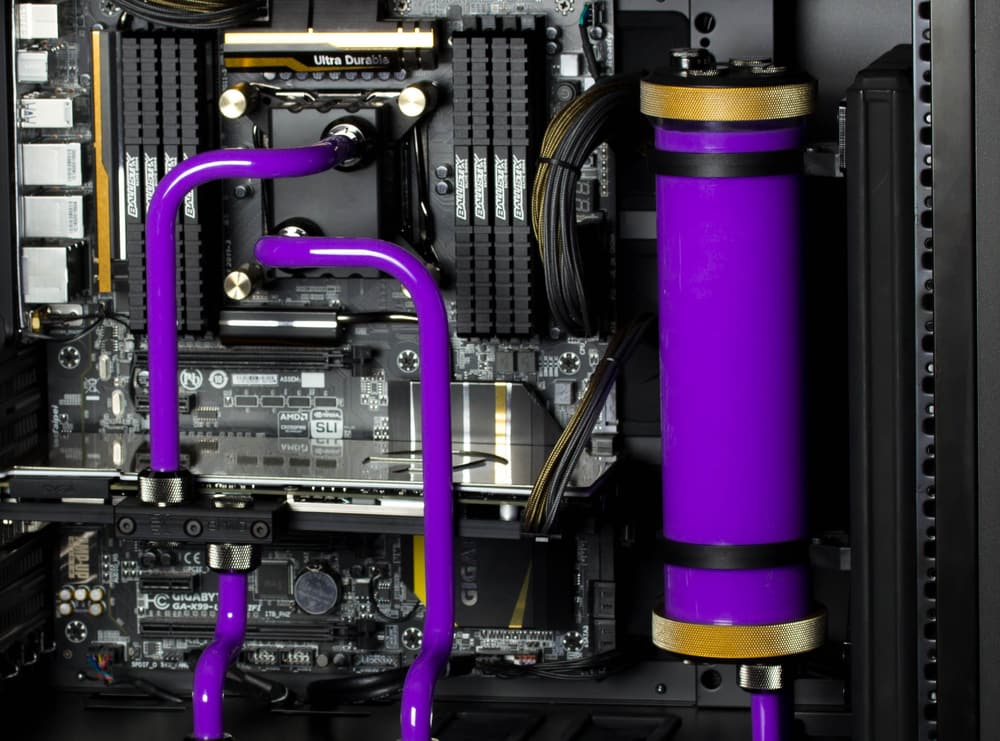
Leak Testing Before First Boot
Updated August 17, 2026Always leak test with the rest of the system unpowered, for at least a few hours and ideally overnight. Run only the pump, keep paper towel under every fitting, and check again after the loop has been through a heat cycle.
Leak testing is the step that separates a small inconvenience from a dead motherboard. Do it before any component other than the pump has power.
How to leak test:
- Fill the loop with the rest of the system unpowered. Only the pump should receive power during testing — most builders bridge the power supply so the pump runs while nothing else does.
- Run the pump and top up the reservoir as air clears and the level drops.
- Lay paper towel or plain kitchen roll under every fitting, joint and port. A slow weep is invisible against black tubing but obvious on white paper.
- Leave it running for several hours — overnight is better. Slow leaks at a compression fitting can take hours to show.
- Check every joint by eye and by touch before you declare it dry, paying particular attention to fittings you had to tighten at an awkward angle.
Test again after a heat cycle: Tubing and fittings move slightly as the loop warms up and cools down for the first time. A loop that was dry during a cold test can weep at a fitting after its first proper heat cycle, so check joints again after the first day of real use.
Common leak points: Compression fittings that were not fully seated before the collar was tightened; O-rings pinched or rolled during assembly; ports where a fitting was cross-threaded; and drain valves left slightly open. Hand-tighten fittings firmly, but do not use tools to force them — overtightening damages O-rings and causes the leak it was meant to prevent.
If you find a leak: Power everything off immediately, drain the affected section, and let all components dry completely before applying power again — a day is not excessive. Do not power a wet system to "see if it still works".
Hard tubing in particular: Bends that are under tension because a run is slightly too short will pull against fittings over time. If a tube has to be flexed into place, remake it rather than relying on the fitting to hold it.